Public · agent skill

Maestro

A public Claude Code skill that treats work as spaces, tasks, documents, and state synthesis, with an agent orchestration path for codebase work.

Public repo Claude Code skill Security cleanup required

Problem

People do not work in a flat task list. They switch between worlds: projects, clients, ideas, chores, and active workstreams. A useful agent needs to know which world it is in, what is active there, what is merely mentioned, and what should be surfaced next.

What I Built

Maestro packages that model as a Claude Code skill. The public repo defines spaces, tasks, documents, State of the World context, status synthesis, context switching, and an agent-run hook for triggering autonomous work against a repository.
Space model Contexts are treated as worlds that can nest and carry their own documents.
State synthesis Claude reads task and document state, then answers what matters right now.
Agent handoff Work can graduate from task context into an autonomous repo instruction.
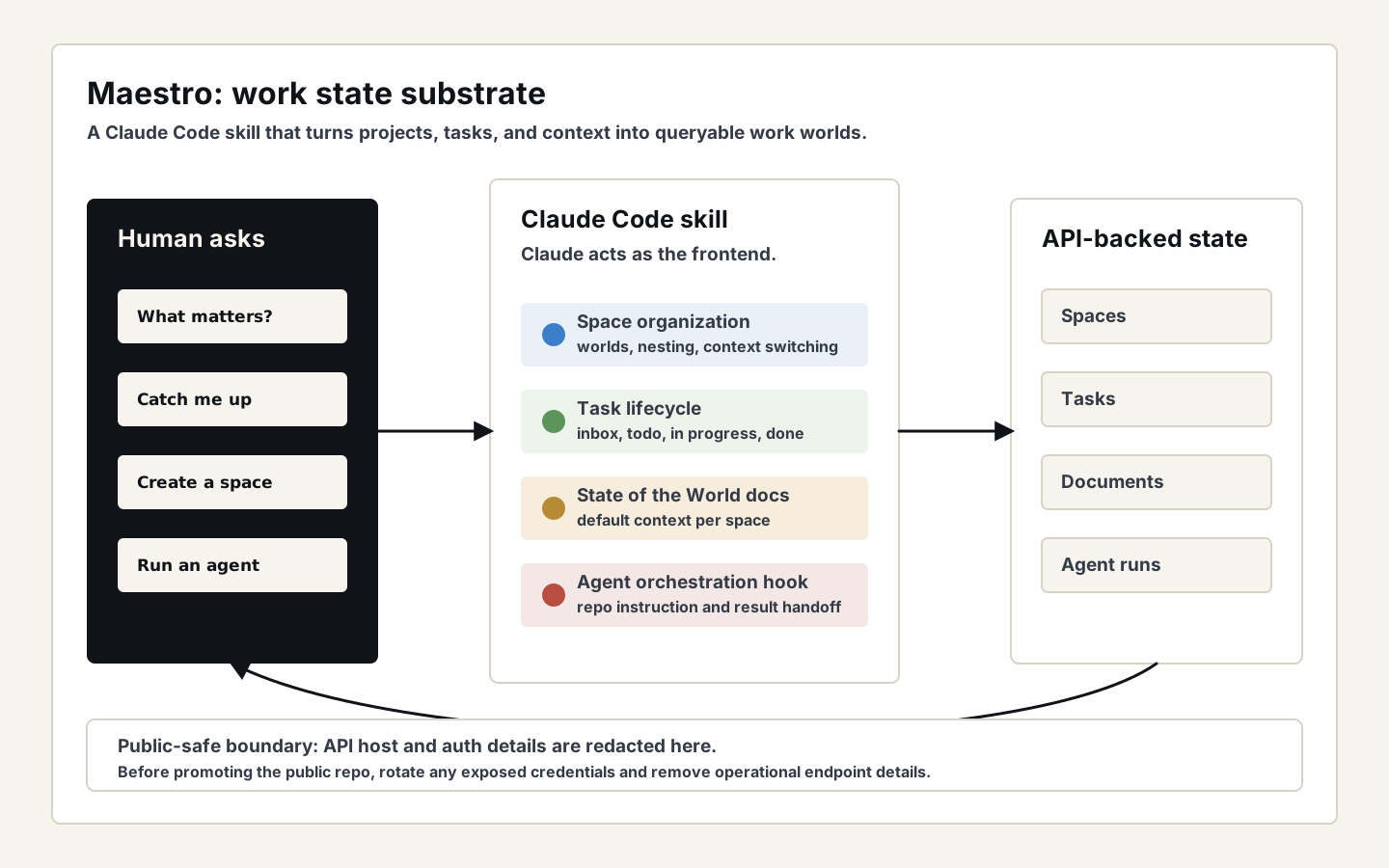
Maestro architecture diagram showing human work questions, Claude Code skill logic, spaces, tasks, documents, state synthesis, API-backed state, and agent runs.
Public-safe diagram grounded in the public README, repository file tree, and skill documentation. API host and auth details are intentionally redacted from the portfolio.
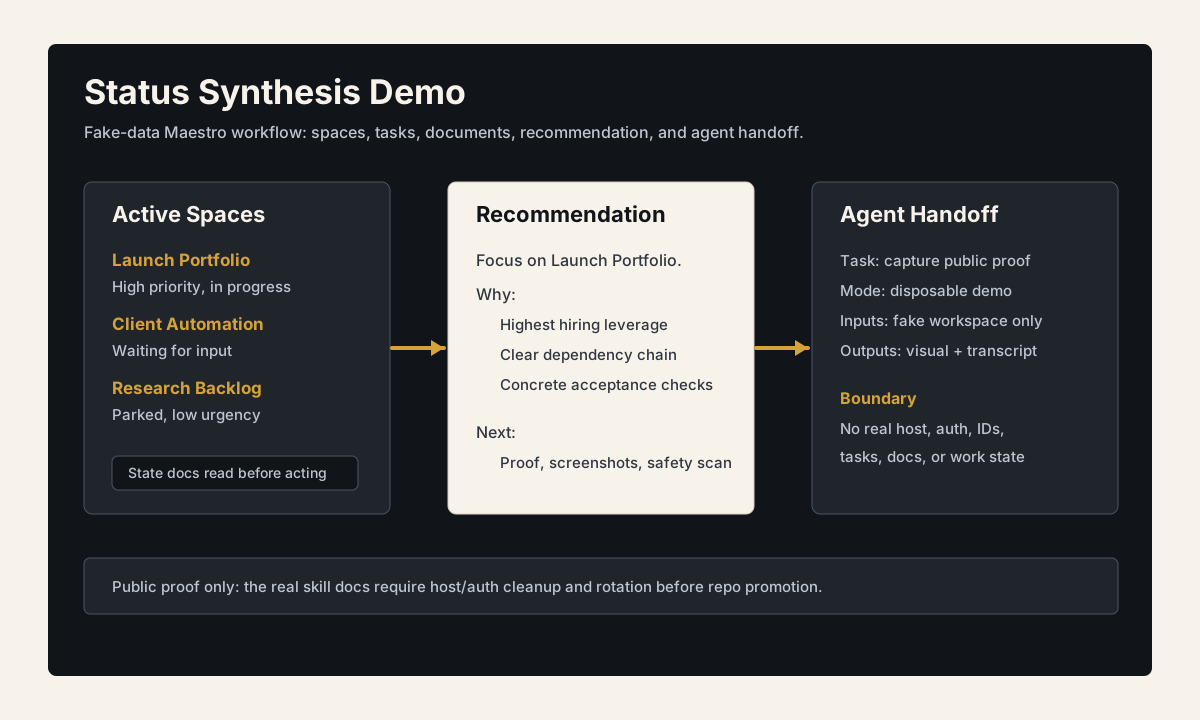
Fake-data Maestro status synthesis showing active spaces, priority recommendation, and agent handoff boundary.
Fake-data status synthesis. It shows the intended user experience for asking what to focus on, synthesizing active spaces, and turning a recommendation into an agent-ready handoff without exposing live work data.

System Architecture

Technical Decisions

  • Model projects as spaces rather than forcing every context into a generic task list.
  • Use documents as the durable memory layer for each space.
  • Teach the agent to distinguish active work from merely mentioned ideas.
  • Expose the system through a skill interface so Claude becomes the operating surface.

What This Proves

Maestro shows the headless side of agent tooling: not just executing tasks, but organizing context, priorities, documents, and handoffs so an agent can help across multiple work worlds.